


Sam Loc Rules: How to Play Sâm Lốc, the 10-Card Vietnamese Game
October 5, 2026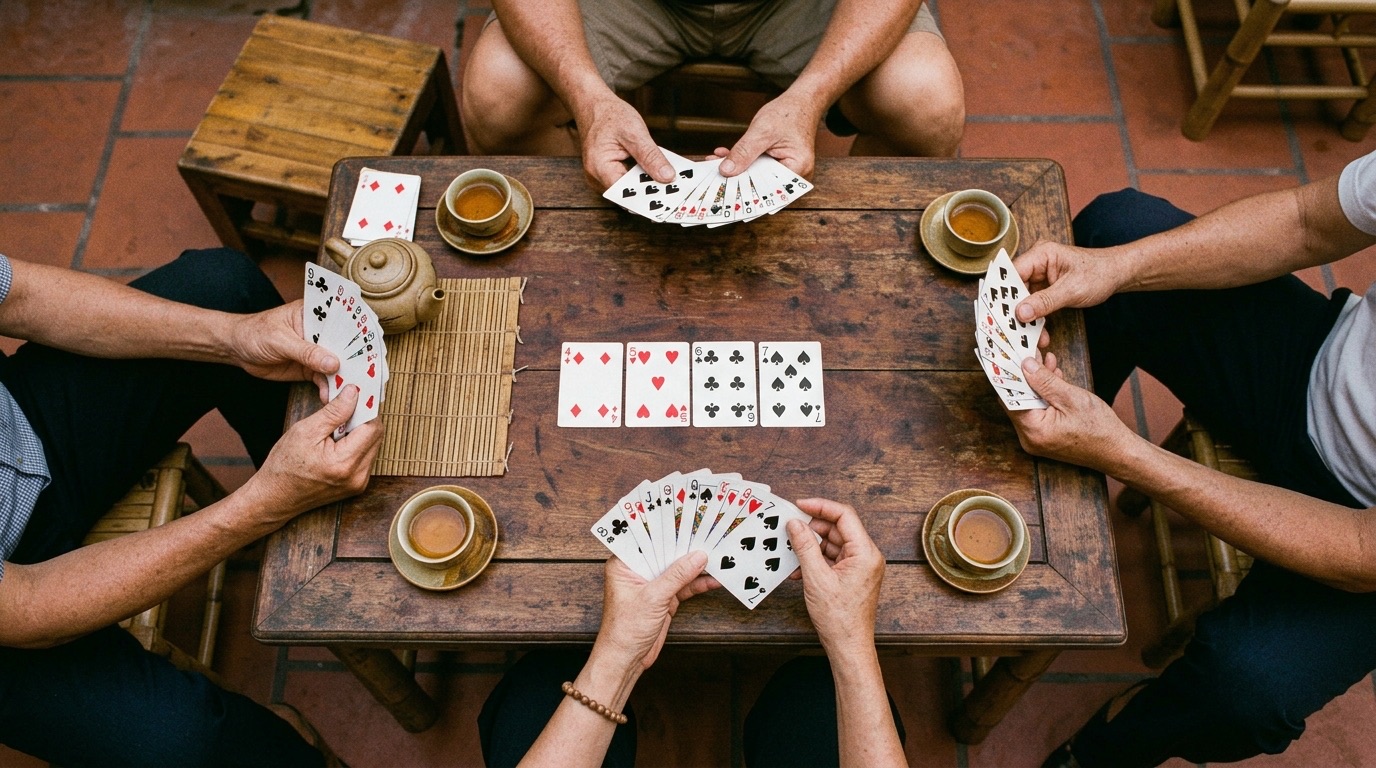
Sâm Lốc (also called Sâm, Lốc or Xâm) is a shedding card game from northern Vietnam. It plays like Tiến Lên, but each player gets 10 cards instead of 13, so rounds are shorter and faster. The aim is simple: be the first to get rid of all your cards. This guide covers the rules, the special calls (báo and báo sâm), the instant wins, and the exact odds of the hands that matter.
Setup
- Deck: a standard 52-card deck, no jokers.
- Players: 2 to 5 (some tables allow 6).
- Deal: 10 cards each. The rest of the deck is set aside and not used in the round.
Card ranking
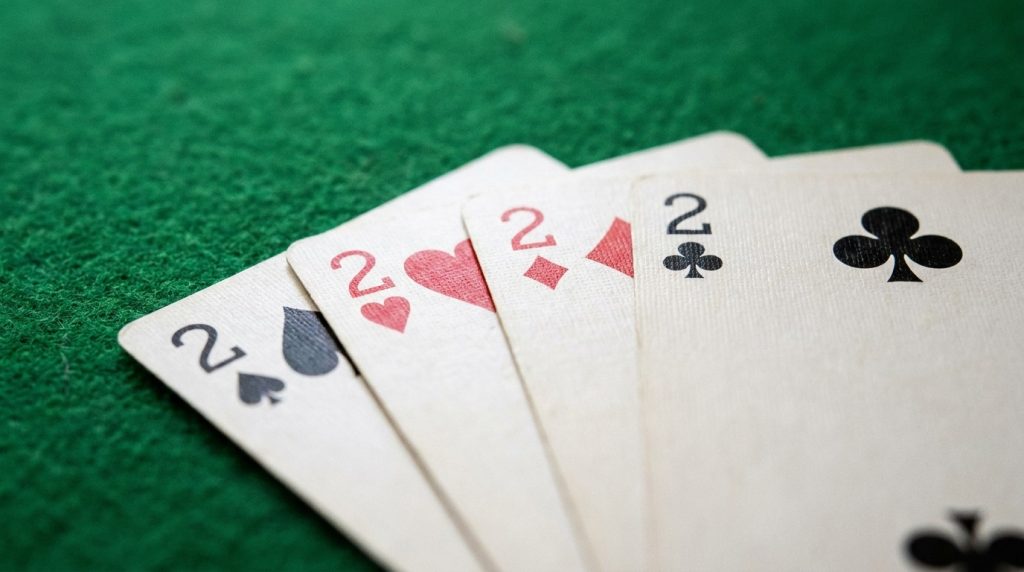
From lowest to highest: 3, 4, 5, 6, 7, 8, 9, 10, J, Q, K, A, 2. The 2 (called “heo”, the pig) is the highest card. When two cards have the same rank, suits decide: spades ♠ > hearts ♥ > diamonds ♦ > clubs ♣. So the 2 of spades is the highest card in the deck and the 3 of clubs the lowest.
Combinations you can play
- Single (rác): one card.
- Pair (đôi): two cards of the same rank.
- Three of a kind (sám): three cards of the same rank.
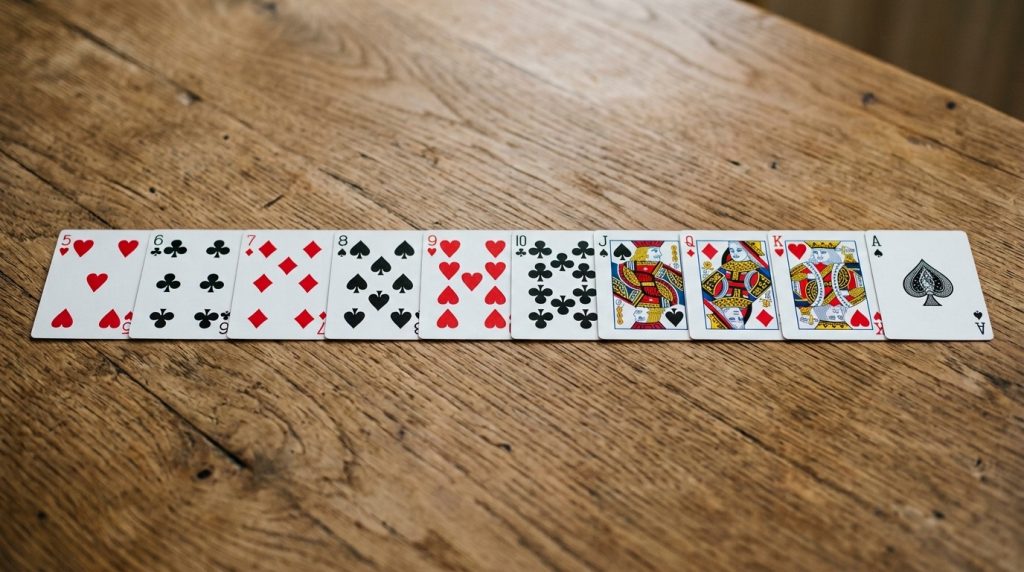
- Straight (sảnh): three or more cards in consecutive ranks, any suits, for example 4-5-6. A 2 normally cannot be part of a straight.
- Four of a kind (tứ quý): four cards of the same rank.
- Consecutive pairs (đôi thông): two, three or four pairs in a row, for example 5-5, 6-6, 7-7.
How a round is played
- The first player leads any combination.
- Each following player must beat it with a higher combination of the same type and size, or pass.
- When everyone else has passed, the player who played last leads a new combination of any type.
- The first player to empty their hand wins the round. The others pay according to the cards they still hold, as agreed at the table.
Beating a 2
Some combinations can “chop” (chặt) the pig:
- A four of a kind or three consecutive pairs beats a single 2.
- Four consecutive pairs beats a pair of 2s, a four of a kind, or three consecutive pairs.
House rules on chopping vary between regions and tables, so agree on them before the deal.
Báo, thối 2 and penalties
- Báo (calling your last card): when you have only one card left you must announce it. Forgetting can be penalised, depending on the table.
- Thối 2 (“rotten pig”): a player still holding a 2 when the round ends pays an extra penalty for each one. Holding an unplayed four of a kind or consecutive pairs can cost more.
- Cóng: a player who never manages to play a card in the whole round is usually penalised too.
Báo sâm: the call that gives the game its name
After the deal and before play starts, a player who thinks their hand can be played out in full without anyone beating a single play may declare “báo sâm”.
- Success: they play all 10 cards without being beaten and win far more than a normal round.
- Blocked: if anyone beats even one of their plays, the caller loses and pays the whole table.
Payouts for both outcomes are agreed by each table. Because one block loses everything, báo sâm only makes sense with cards and combinations others can hardly beat, such as 2s or a four of a kind.
Instant wins (tới trắng)
Some hands win as soon as they are dealt, with no play. Commonly:
- Dragon straight (sảnh rồng): all 10 cards form one run.
- Four consecutive pairs or two fours of a kind (depending on the table).
- Other very strong hands the table agrees on in advance.
Sâm Lốc odds: how often you are dealt each hand
A 10-card hand from 52 cards can be any of 15,820,024,220 combinations. Counting them exactly:
| Hand on the deal | Chance |
|---|---|
| At least one 2 | 58.7% (about 3 in 5) |
| Any four of a kind | 1.0% (about 1 in 99) |
| All four 2s | 1 in 1,289 |
| Dragon straight (3–Q, 4–K or 5–A) | 1 in 5,029 |
| Two fours of a kind | 1 in 214,398 |
On average a hand holds 0.77 twos, so most deals give at least one player a pig to manage. A dragon straight is rare: it needs exactly one card of each of ten consecutive ranks, and since a 2 cannot be in a straight, only three runs are possible.
Sâm Lốc vs Tiến Lên
| Difference | Sâm Lốc | Tiến Lên (southern) |
|---|---|---|
| Deck | 52 cards, no jokers | 52 cards, no jokers |
| Cards per player | 10 | 13 |
| Highest card | 2 of spades | 2 of spades |
| Báo sâm before play | Yes | No |
| Calling the last card | Required | Not required |
| Penalty for holding 2s at the end | Yes | Yes |
If you already play Tiến Lên, Sâm Lốc takes a few rounds to learn. See also the overview of Vietnamese card games.
Playing card games online
Sâm Lốc itself is rarely found in international online casinos. The card games you will find there are live-dealer tables such as blackjack, baccarat and poker. 22bet‘s live casino, for example, has more than 100 blackjack tables. If you want to play for real money, set a budget first.
Play responsibly
Played for money, Sâm Lốc is a form of gambling. Treat it as entertainment with a cost, set limits on time and money before you start, and stop when they are reached. For adults 18 and over only.

22bet

20Bet
Sam Loc FAQ
How many cards do you get in Sâm Lốc?
Ten each, from a standard 52-card deck without jokers. That is the main difference from Tiến Lên, where each player gets 13, and it makes rounds shorter.
What is the highest card in Sâm Lốc?
The 2 (called heo, the pig). Between cards of the same rank, spades beat hearts, hearts beat diamonds and diamonds beat clubs, so the 2 of spades is the highest card and the 3 of clubs the lowest.
What does báo sâm mean?
It is a declaration, made right after the deal, that you will play out all 10 cards without anyone beating a single play. If you succeed you win big; if anyone beats you once, you lose and pay the whole table. The amounts are agreed by each table.
What is thối 2?
Thối 2 (“rotten pig”) is the penalty for still holding a 2 when the round ends, charged for each 2 left. Holding an unplayed four of a kind or consecutive pairs can cost more, depending on the table.
How often are you dealt a four of a kind in Sâm Lốc?
About 1 hand in 99 (1.0%). Getting all four 2s is about 1 in 1,289, and a dragon straight of all 10 cards about 1 in 5,029.
Can a four of a kind beat a pair of 2s?
Under the common rules, a four of a kind beats a single 2. Beating a pair of 2s takes four consecutive pairs. Chopping rules vary between tables, so agree on them before you play.